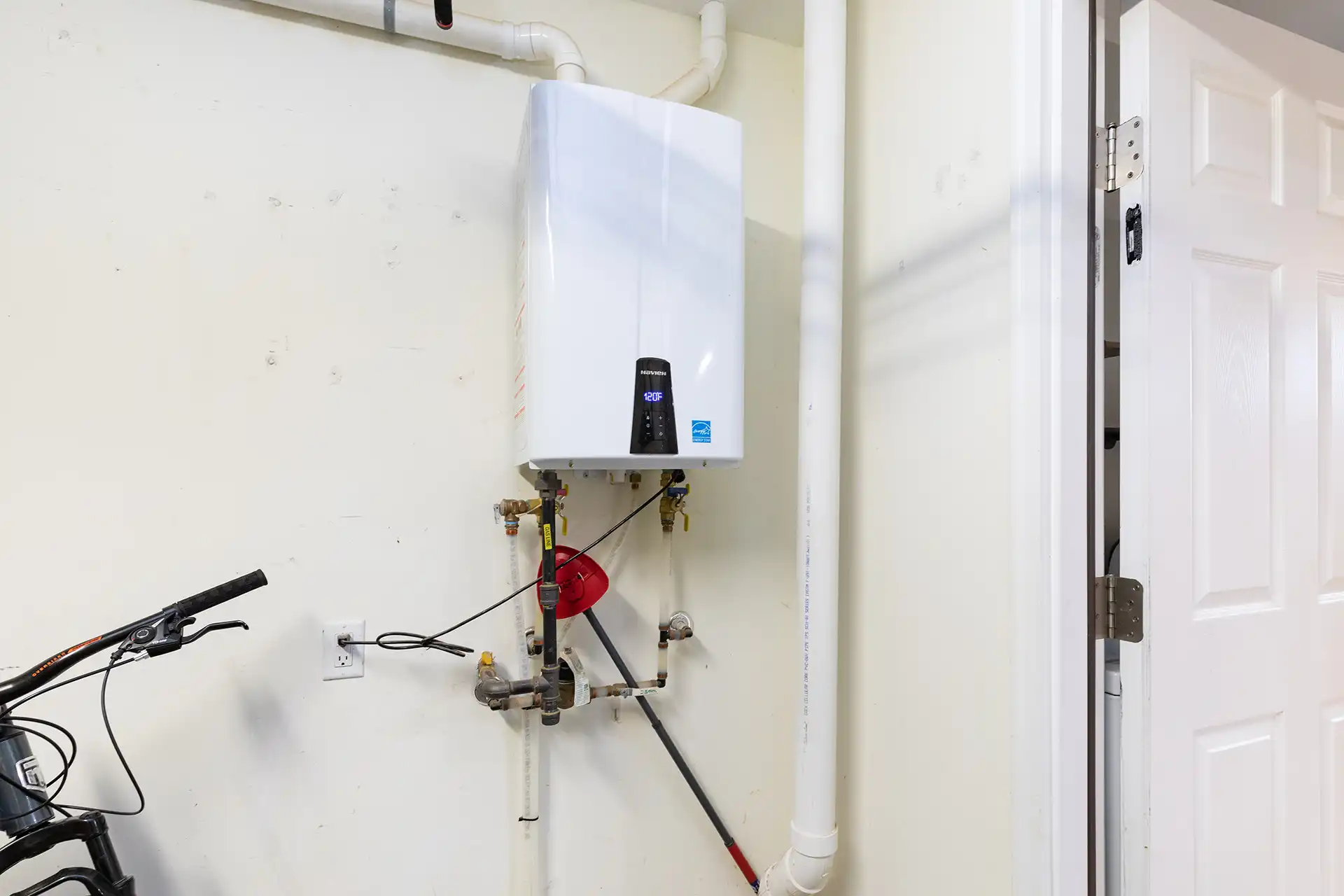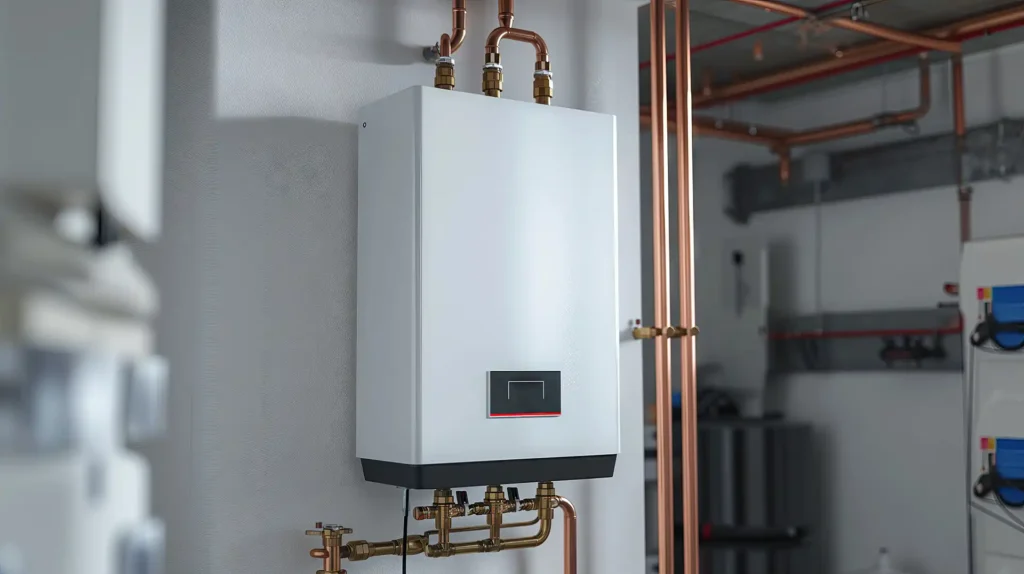
Hot Water On Demand, Without the Tank
A tankless water heater does not store hot water. It heats it instantly as it flows through the unit, which means the supply never runs out regardless of how many people are showering, how much laundry is running, or how long the dishwasher has been going. For households that have dealt with the familiar problem of the last person in the shower getting cold water, or a tank that takes an hour to recover after heavy use, the shift to tankless is a noticeable improvement in daily life. A.W.E. installs and services tankless systems from leading manufacturers and handles everything from the initial assessment through final commissioning.
The Efficiency Case for Going Tankless
A conventional storage tank water heater maintains a reservoir of hot water around the clock, heating it continuously to compensate for the heat it loses to the surrounding air. That standby heat loss is a consistent drain on energy that adds up over the course of a year without providing any useful hot water. Tankless units eliminate that loss entirely by only consuming energy when hot water is actually being used. For households with moderate to high hot water demand, the efficiency gains translate into meaningful reductions in monthly gas or electric costs over the lifespan of the unit. Tankless water heaters also tend to have a longer service life than traditional tank models, which factors into the long-term value of the investment.
What Installation Requires in an Existing Home
Switching from a tank to a tankless system is not always a direct swap, and understanding what your home needs before committing to the project avoids surprises partway through. Gas tankless units have significantly higher BTU demands than traditional tank models, and many homes require an upgrade to the gas supply line to support the unit’s full output. Venting requirements are also different, with most high-efficiency tankless units using a sealed direct-vent configuration that requires new venting to be run. Electric tankless units for whole-home use typically require a significant electrical service capacity that not every home currently has. A.W.E. assesses your home’s existing infrastructure during the estimate visit and provides a complete picture of what the installation will involve before any work begins.
Maintenance and Descaling in Hard Water Areas
Tankless water heaters deliver excellent long-term performance with proper maintenance, but they are more sensitive to mineral buildup than tank units in areas with hard water. Scale accumulation on the heat exchanger reduces efficiency and can eventually cause the unit to fault or underperform. Annual descaling flushes the heat exchanger with a descaling solution that dissolves mineral deposits and restores the unit to proper operating efficiency. In DuPage County, where water hardness is a factor for many homeowners, this maintenance step is worth building into your regular service routine. A.W.E. can handle descaling as part of an annual maintenance visit and advise on whether a whole-home water softener would reduce the frequency needed.