
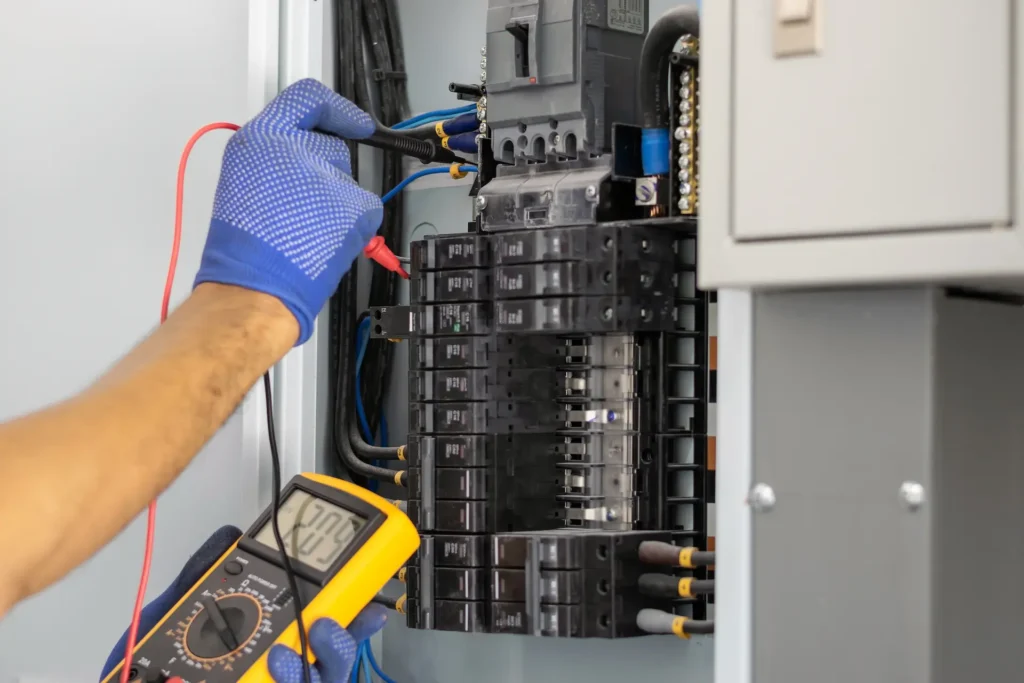
When Your Panel Is the Problem, Everything Else Suffers
Most homeowners never think about their electrical panel until something goes wrong. But the panel is the single point through which all electrical power in your home flows, and when it is undersized, outdated, or failing, the effects show up everywhere. Circuits that trip under normal loads, an inability to add new appliances or outlets without overloading existing circuits, and a panel that runs warm to the touch are all signs that the panel itself may be at the root of your electrical frustrations. A.W.E. evaluates your panel honestly and recommends the solution that actually addresses what is going on.
Panel Upgrades for Modern Electrical Demands
Homes built several decades ago were designed around a fraction of the electrical load that the average household draws today. A panel that was adequately sized for a home in the 1970s or 1980s was not built with electric vehicle chargers, whole-home generators, high-efficiency HVAC systems, or the density of electronics and appliances that are now standard in most kitchens and home offices. If your current panel does not have the capacity to support what your home actually needs, an upgrade to a higher-amperage service is often the most practical long-term solution. Our licensed electricians assess your current and anticipated load and recommend the right panel size for where your household is headed.
Replacing Panels With Known Safety Issues
Not all older panels are created equal. Certain panel brands and designs that were widely installed in prior decades have since been identified as having reliability and safety concerns that go beyond normal aging. Federal Pacific Electric panels with Stab-Lok breakers and Zinsco panels are among the most commonly cited, with documented histories of breakers that fail to trip under fault conditions. If your home still has one of these panels, having it evaluated by a licensed electrician is a reasonable and responsible step regardless of whether it has caused any visible problems to date. A panel that does not trip when it should is not protecting your home.
What a Panel Replacement Involves
A panel replacement is a significant but well-defined project. Our electricians coordinate with your utility provider to arrange a temporary service disconnect, remove the existing panel, install the new one, reconnect all circuits, and restore power once the work has been inspected and approved. The process typically takes one day for a standard replacement. We handle the permitting process, communicate with the utility on your behalf, and keep you informed at every stage so there are no surprises. When the job is done, your home has a modern, properly rated panel with capacity to support your current needs and room to grow.

