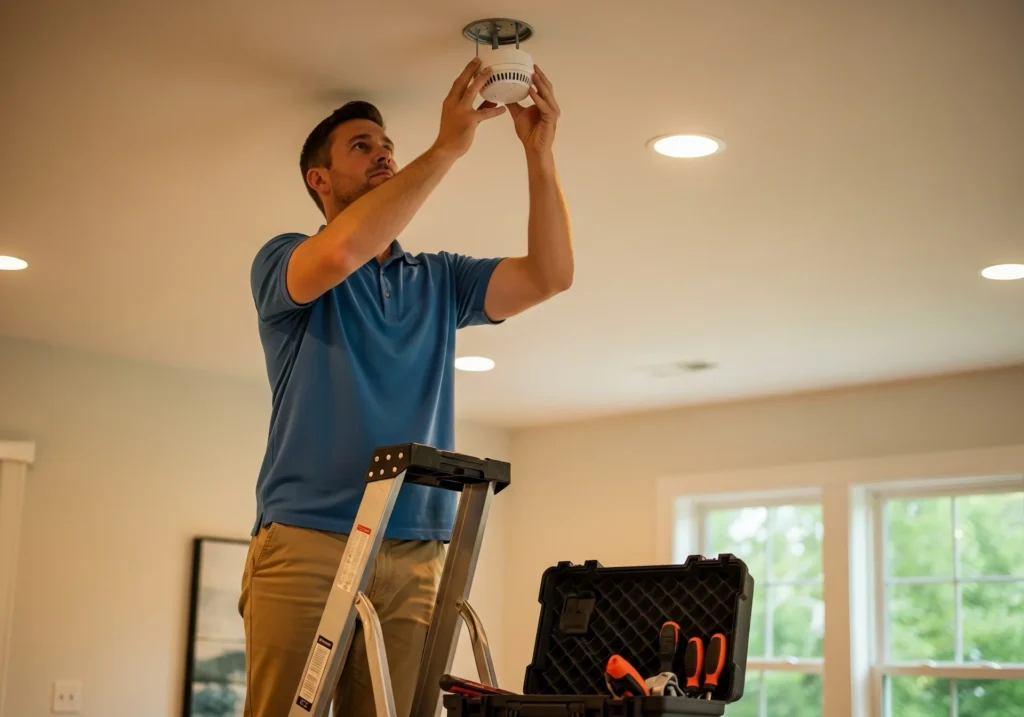
Smoke and CO Detectors in West Chicago, IL

Smoke and carbon monoxide detectors are the last line of defense between your family and two of the most serious hazards a home can present.
smoke detector install
Ready to Schedule Your Service?

Battery-Operated Is Not Always Enough

Standalone battery-operated detectors are better than nothing, but they have real limitations. Batteries die, often without a functioning low-battery warning, and detectors that are not interconnected mean an alarm in one part of the house may not be heard in another. Hardwired smoke and carbon monoxide detectors solve both of these problems. Connected directly to your home’s electrical system with a battery backup, they do not depend on a battery that was last changed sometime before you can remember. Interconnected hardwired detectors communicate with each other, so when one triggers, every alarm in the home sounds simultaneously. In a fire or CO event where seconds matter, that distinction is not a minor one.

Proper Placement Is as Important as the Detectors Themselves

A detector installed in the wrong location provides far less protection than one placed correctly. Smoke detectors should be installed on every level of the home, inside each bedroom, and outside sleeping areas. Carbon monoxide detectors belong on every level and near sleeping areas, since CO poisoning is most dangerous when people are asleep and unable to notice symptoms. Detectors placed too close to kitchens or bathrooms can generate nuisance alarms from cooking steam or shower humidity, which leads homeowners to disable them. Our licensed electricians follow current placement guidelines and apply practical judgment to ensure your detectors are positioned for reliable protection without unnecessary false alarms.

Hardwired Installation and Interconnection

Installing hardwired detectors involves running low-voltage wiring that connects each unit to the others in a network, so all devices communicate when any one of them is triggered. In new construction this wiring is built in from the start. In existing homes it requires routing wire through walls and ceilings to link each detector location. A.W.E. handles the full installation, from running the interconnect wiring to connecting the devices and testing the entire system before we leave. If your home already has hardwired detectors that are aging or no longer communicating correctly, we can assess the existing wiring and replace the devices without disturbing what is already in the walls.

When to Replace Your Existing Detectors

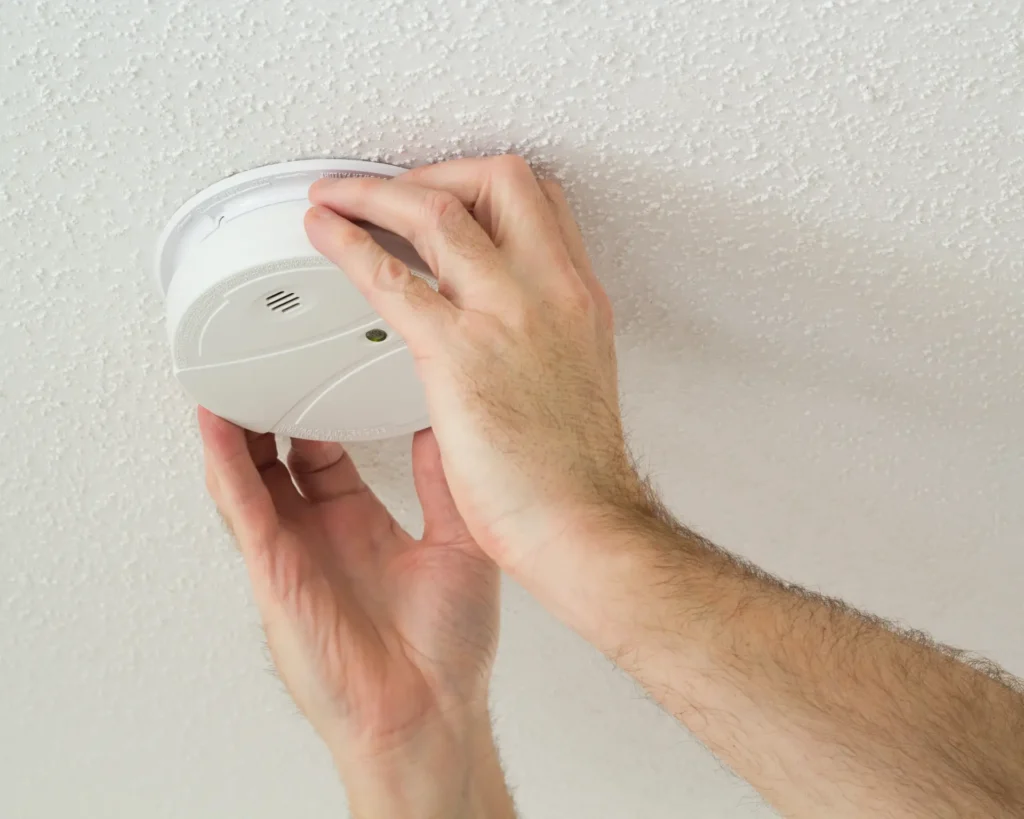
Smoke detectors have a recommended replacement interval of ten years from the date of manufacture, and carbon monoxide detectors should be replaced every five to seven years. Many homeowners are surprised to find that the detectors in their home are well past these intervals. An aging detector may still sound when tested with the test button, but that test only confirms the alarm circuit works. It does not confirm that the sensing element is still capable of detecting smoke or CO at the concentrations that matter. If you do not know when your detectors were manufactured, checking the date stamp on the back of each unit is worth the few minutes it takes.
smoke detector

Protection That Works When It Needs To Is Not Optional

Smoke and CO detectors are not a home upgrade. They are a basic safety requirement that deserves proper installation and regular attention. Call A.W.E. to schedule a detector installation or assessment with a licensed electrician and make sure your home’s protection is actually up to the job. Book your service now or call us at (630) 283-6225

Call Us Anytime

24/7 availability for emergencies.

Flexible Scheduling

Choose a time that works best for you.

Fast Response

Same-day & next-day services available.

Why DuPage County Homeowners Trust A.W.E.

  • Over 100 Years in Business: Since 1911, A.W.E. has been the trusted name in home comfort for Carol Stream and DuPage County residents.
  • Licensed and Insured Technicians: Every technician is fully licensed and insured, so you can feel confident in the quality and safety of every service we provide.
  • BBB A+ Rated: We have earned and maintained an A+ rating with the Better Business Bureau through consistent, honest service.
  • Upfront, Transparent Pricing: You will always know the cost before we begin. No hidden fees, no surprise charges.
  • 100% Satisfaction Guarantee: If you are not completely satisfied, we will keep working until you are.
  • Same-Day Service Available: We respond quickly because we know your comfort cannot wait.
Furnace Repair Company Naperville
Frequently Asked Questions
How do I know if my existing smoke and CO detectors need to be replaced?
Check the manufacture date on the back of each unit. Smoke detectors should be replaced at the ten year mark and carbon monoxide detectors at five to seven years, regardless of whether they appear to be functioning. If the date stamp is missing or illegible, replacement is the safe assumption. Detectors that chirp persistently even after a fresh battery, respond slowly during a test, or are visibly discolored or damaged should be replaced promptly without waiting for the interval to arrive.
Combination smoke and carbon monoxide detectors are available and widely used in residential applications. They consolidate two functions into one device, which simplifies installation and reduces the number of units on the ceiling. The trade-off is that a single device failure eliminates both protections in that location simultaneously. Dedicated single-function detectors offer some redundancy in that regard. Both approaches are code-compliant in most jurisdictions, and the right choice often comes down to the specific layout and needs of your home. Our electricians can advise on the best configuration during the installation visit.
The terms are often used interchangeably in residential contexts. Both refer to devices that detect carbon monoxide and produce an audible alert when concentrations reach a threshold level. What matters most for residential protection is that the device is listed to the current UL 2034 standard, is properly placed near sleeping areas and on every level of the home, and is within its recommended service life. If you have a gas furnace, gas water heater, attached garage, or any fuel-burning appliance in your home, CO detection is not optional.