More Than a Comfort Feature
Ceiling fans are one of the most cost-effective comfort upgrades a homeowner can make. Running a ceiling fan in the correct direction during summer creates a wind chill effect that makes a room feel several degrees cooler without lowering the thermostat, and reversing the direction in winter pushes warm air that has collected near the ceiling back down into the living space. The energy cost of running a ceiling fan is a fraction of what it costs to run an air conditioner or furnace for the same period of time. Over the course of a year, that adds up. The key is having the fan sized correctly for the room, mounted securely, and wired to function the way it was designed to.
What Ceiling Fan Installation Actually Requires
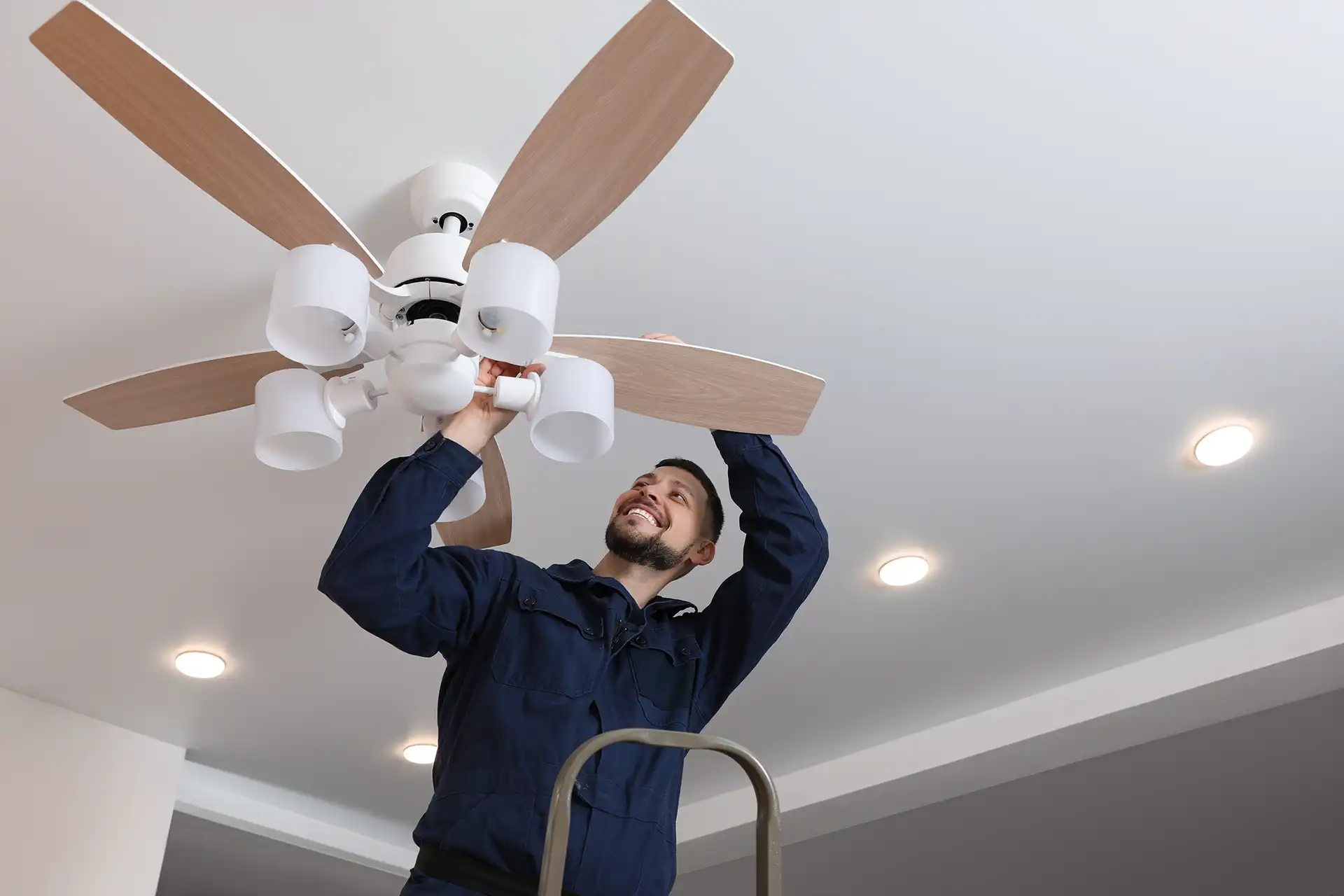
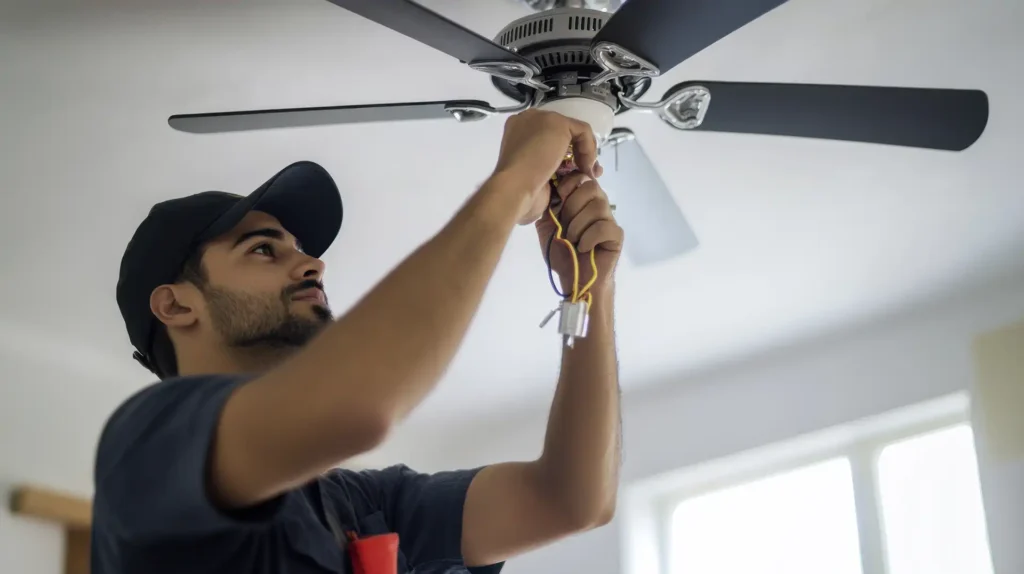
Ceiling fan installation is straightforward in some situations and more involved in others, and the difference matters. A fan being installed in place of an existing ceiling fan uses the existing wiring and box without modification. Replacing a light fixture with a ceiling fan requires confirming that the existing junction box is fan-rated, since standard light fixture boxes are not designed to support the weight and movement of a rotating fan and can fail over time if used incorrectly. Installing a ceiling fan where no fixture currently exists requires running new wiring from a switch location back through the ceiling to the panel. Our licensed electricians assess the situation accurately and handle whatever the installation requires so the end result is safe and built to last.
Outdoor and Wet-Rated Fan Installation
Covered porches, screened enclosures, and outdoor living areas are increasingly popular spaces for ceiling fans, and the installation requirements in these environments are different from interior rooms. Fans installed outdoors need to be rated for the level of moisture exposure they will encounter, with damp-rated fans appropriate for covered areas and wet-rated fans required where direct exposure to rain is possible. Standard interior fans installed in outdoor locations will deteriorate quickly and can present safety hazards as the motor and wiring degrade. A.W.E. installs outdoor ceiling fans correctly for the environment they are going into so performance and safety hold up over time.
Ceiling Fan Maintenance and Repairs
A ceiling fan that wobbles, makes noise, operates at inconsistent speeds, or has stopped working on one or more functions is worth having looked at rather than replaced outright. Wobble is most commonly caused by blade imbalance or loose mounting hardware and is typically a quick fix once the source is identified. Noise during operation can come from a loose canopy, worn blade brackets, or a motor beginning to wear. Fans that no longer respond to their remote or wall control may have a receiver or capacitor issue that is far less expensive to address than buying and installing a new fan. Our technicians diagnose ceiling fan problems accurately and give you an honest recommendation on whether repair or replacement makes more sense.